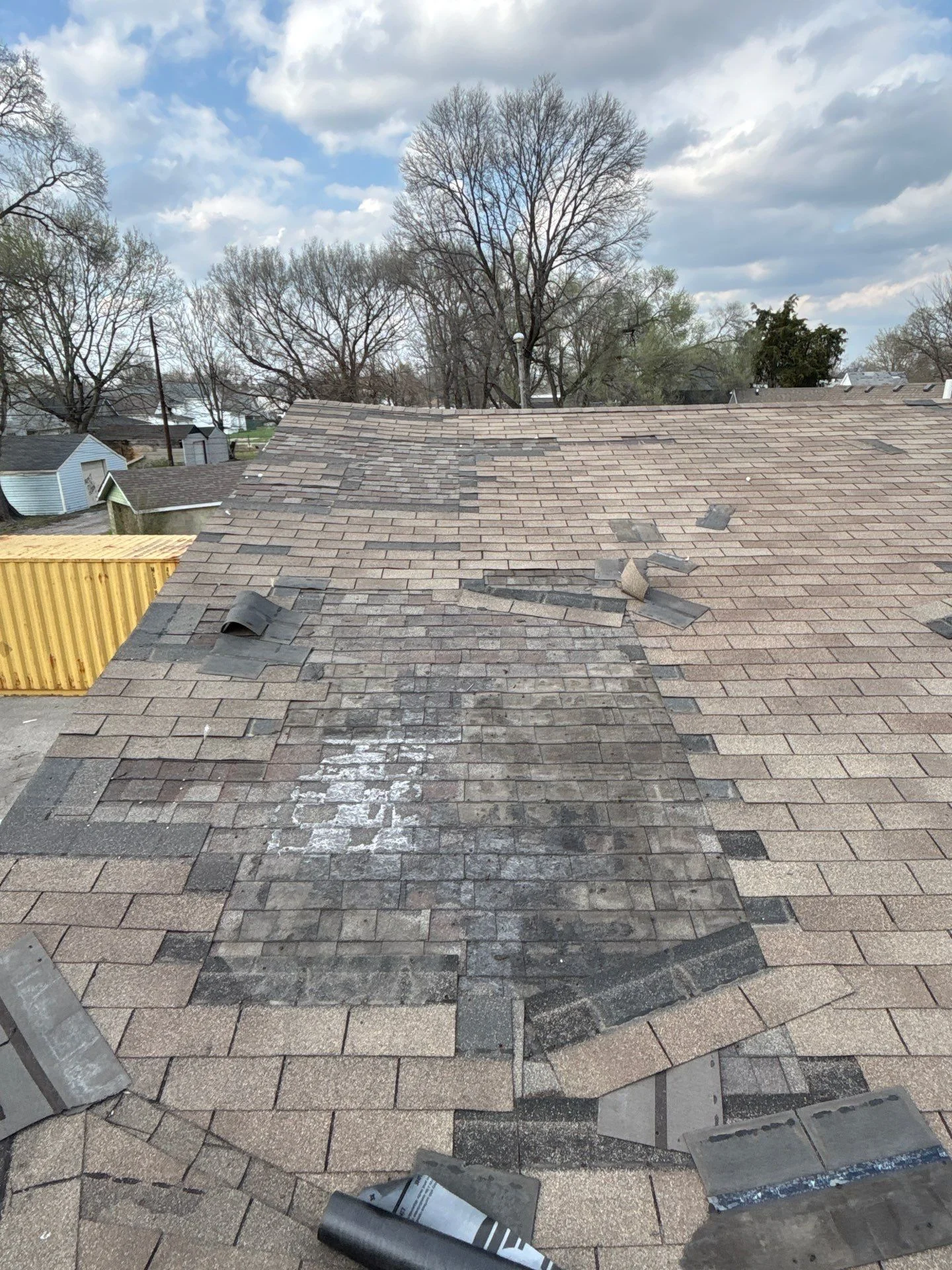
Why Westfield Leaks Rarely Start Where You See Them
The hardest part of leak work is resisting the temptation to patch the obvious spot. A stain directly below a bathroom vent looks like a vent problem, and sometimes it is, but just as often the water entered six or eight feet uphill at a ridge cap that split during a wind event last March. Gravity pulled the water down the underside of the deck until it met a fastener or a seam, and that became the drip point inside your house. When our technicians arrive for a leak call, the first thing we do is stop guessing. We get on the roof, walk the suspected drainage path in reverse, and check every penetration, valley, and transition between the visible stain and the peak above it.
Central Indiana weather makes this detective work harder than it would be in a milder climate. Freeze-thaw cycles lift shingles and crack sealant. Summer heat cooks old pipe boots until the rubber splits around the collar. Hail from the spring storms that roll through Hamilton, Marion, and Hendricks counties leaves bruises that do not leak immediately but open up months later after UV exposure weakens the mat. A single roof can have three unrelated problems contributing to one interior stain, which is why a quick visual from the driveway almost never tells the full story. Our free roof inspections include attic checks when access allows, because the underside of the deck often reveals staining trails that point directly to the entry point.
Attic inspections also tell us things the roof surface cannot. A flashlight held at a low angle along the rafters picks up water trails that have dried into faint brown streaks, and those streaks follow gravity in a way that points almost surgically back to the origin. We also look for rusted nail tips, blackened sheathing around vents, and insulation that has compressed under the weight of repeated soaking. Sometimes the clue that solves the puzzle is a single wet fastener six feet from the stain, and once you see it, the whole drainage path becomes obvious. This is why we do not charge for diagnosis on a leak call. The hour we spend tracing the water is the difference between a repair that lasts and a guess that wastes your money.
The Common Culprits We Find on Leak Calls
Pipe boots are the number one leak source we repair in Westfield, hands down. The neoprene collar that seals around your plumbing vents typically lasts ten to fifteen years, while the shingles around it are rated for twenty-five or thirty. That mismatch means the boot fails first, almost every time, and a twenty dollar part left unchecked can soak the insulation around a bathroom drain line for an entire season. When we replace a boot, we use a lead-lined or high-grade silicone version that outlasts the original by a wide margin, and we reset the surrounding shingles with fresh sealant so the repair blends in rather than announcing itself from the curb. Step flashing along sidewalls and chimneys is the second most frequent offender. When flashing is face-nailed rather than woven in properly, or when the caulk sealing a counter-flashing reglet dries out and shrinks, water sneaks behind the siding and ends up in a wall cavity that eventually saturates the ceiling below.
Valleys are another frequent failure point, especially on homes where the original builder used a closed-cut valley without enough underlayment protection. When debris packs into a valley and water backs up over the shingle edge, capillary action pulls moisture sideways under the courses. We see this constantly on homes with mature trees, which describes a lot of Westfield. Chimneys deserve their own mention because they combine every hard detail in roofing into one small area. Cricket flashing, counter-flashing, brick mortar joints, and cap condition all interact, and when any one fails the whole assembly starts leaking. Skylights behave the same way, and the older acrylic-dome units installed in homes built during the eighties and nineties are now reaching an age where the internal seals fail even when the surrounding flashing looks fine. Storm events complicate all of this, and if a recent hail or wind event preceded your leak, our storm damage specialists can document the cause for an insurance claim.
Ice damming deserves a mention too, because Westfield winters regularly produce the conditions that create it. When warm attic air melts snow at the ridge, the meltwater runs down to the colder eave, refreezes, and builds a dam that forces standing water back up under the shingles. A roof that sheds rain perfectly can still leak in January if the insulation and ventilation are not balanced, and those leaks often show up as stains along exterior walls rather than in the middle of ceilings.
What a Proper Repair Looks Like
When we diagnose a leak, we take photos of the entry point, photos of any secondary damage to the deck or underlayment, and we walk you through what the repair will involve before any work starts. A typical pipe boot replacement runs between three hundred and five hundred dollars depending on how many are failing and whether the surrounding shingles need replacing too. A flashing repair around a chimney or skylight can range from four hundred to well over a thousand, and full valley rebuilds land higher still. We price the work honestly and we do not inflate a simple repair into a replacement pitch. On the other hand, if we open up an area and discover that the decking is soft across a wide section, or that the shingles have lost their granules and are cracking across the field, we will show you that too and have a real conversation about whether targeted repair still makes sense or whether you are investing good money into a roof that has reached the end of its life.
After the repair, we water-test the area when conditions allow, and we ask you to keep an eye on the interior stain over the next several weeks. Drywall that has been saturated will stay discolored even after the leak stops, so we always recommend letting the area dry completely before repainting. If the stain reappears during the first heavy rain, we come back at no charge. That is how leak work should be handled. Find the source, fix it, stand behind it. Westfield Roofer has built its reputation on that sequence, and every technician who carries our name on a truck understands that a leak call is not finished until the homeowner sleeps through the next storm without listening for drips.
The worst outcome in leak repair is the cycle where a homeowner pays for three or four patches over two years, each one addressing a different symptom while the real cause keeps pushing water through. We would rather spend an hour on the roof tracing the path correctly than sell you a quick caulk job that fails next spring.