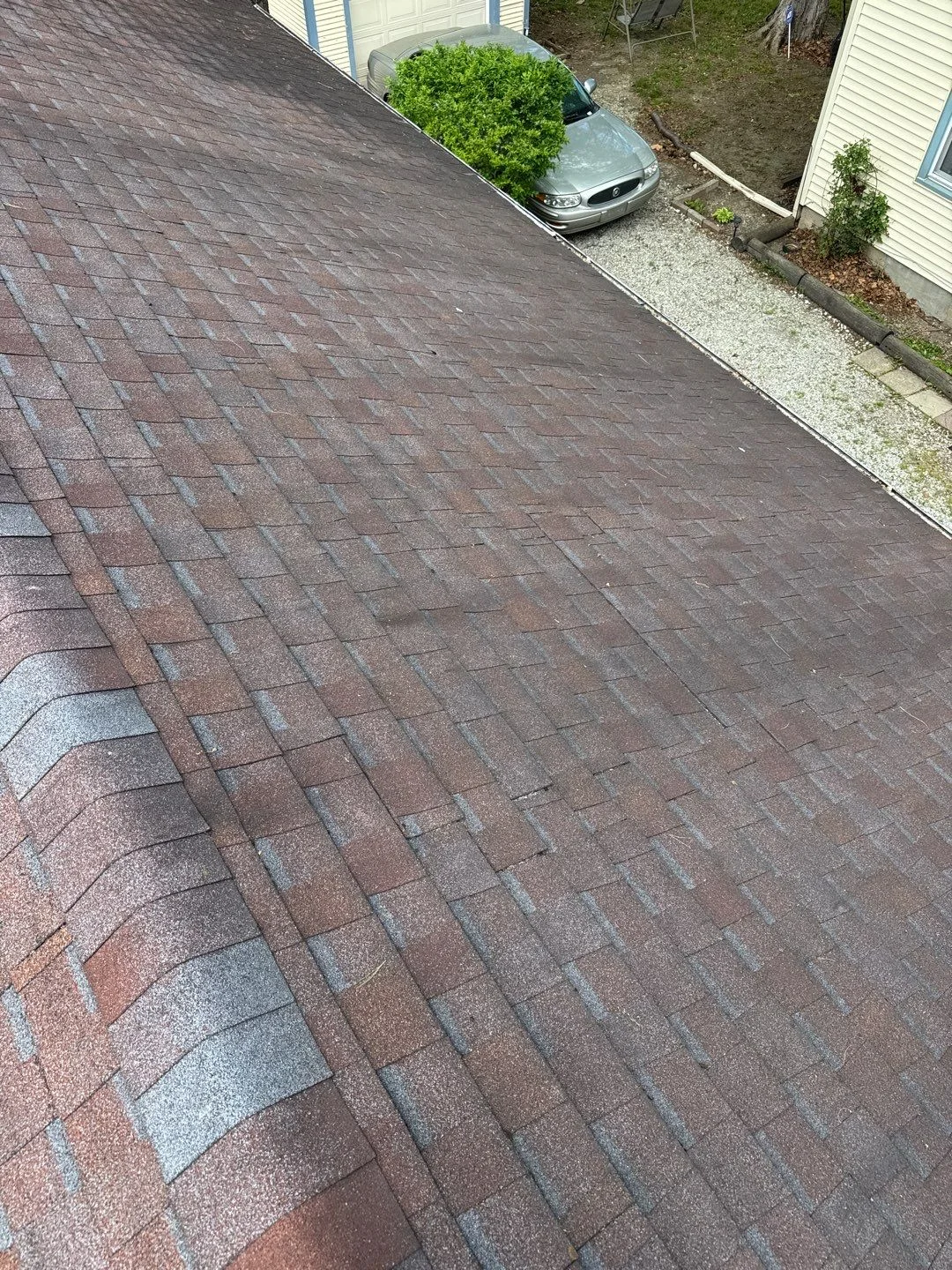
Quick Answer: Warning Signs That Demand Attention
Every Westfield homeowner should know these warning signs. Some mean your roof needs attention soon. Others mean it needs attention immediately.
Urgent signs requiring immediate action:
- Active leaks reaching interior ceilings
- Sagging or visible structural deflection
- Daylight visible through roof decking from attic
- Mold growth in the attic
- Major storm damage requiring emergency tarping
Important signs requiring attention within weeks to months:
- Heavy granule loss with bare spots
- Multiple missing shingles after routine weather
- Widespread shingle curling or cupping
- Age beyond 20 years on standard asphalt
- Repeat leak points that keep requiring repairs
The Difference Between Urgent and Important
Understanding which signs need immediate attention versus planned attention helps Westfield homeowners avoid both panic and complacency. The distinction matters because urgent signs typically indicate active damage happening right now, while important signs indicate problems that will become urgent if ignored.
Urgent: Active Damage Happening Now
Active leaks mean water is entering your home at this moment. Every rain event adds more damage. The question is not whether to act but how quickly. Interior ceiling stains indicate water has already traveled through multiple roofing layers and reached finished surfaces. At that point, what happens next determines whether you face a $500 roof repair or a $15,000 water damage restoration project.
The progression of delayed response to active leaks:
- Week 1-2: Active leak continues, ceiling stain expands, minor interior damage.
- Week 3-4: Attic insulation saturates and compresses. Moisture spreads to structural members.
- Month 2-3: Mold growth begins in concealed spaces. Wood begins to rot.
- Month 4-6: Mold spreads. Drywall deteriorates. Paint peels on adjacent surfaces.
- Month 6+: Structural damage. Expanded mold remediation required. Insurance claims for water damage increase in complexity.
Sagging or visible structural deflection indicates the roof is no longer adequately supporting its own load. Delays in addressing sagging can lead to collapse scenarios, especially during winter when snow loads add stress.
Important: Problems Developing Over Time
Important signs indicate your roof is deteriorating toward failure but has not yet failed. The timeline for action is usually measured in months rather than weeks, but delays still compound. A roof with heavy granule loss and widespread curling will likely develop urgent signs within the next 6-18 months if left untreated.
The advantage of addressing important signs early is that you control the timeline. You can:
- Schedule replacement during favorable weather and pricing seasons
- Negotiate with multiple contractors without emergency pressure
- Plan financially with proper savings or financing arrangements
- Coordinate with other projects like siding or exterior painting
- Choose premium materials without emergency constraints
Seven Signs Westfield Homeowners Should Not Ignore
Sign 1: Shingles in the Yard After Moderate Wind
Finding shingles scattered in your yard after significant storms is normal and often covered by insurance. Finding shingles after moderate wind events (30-45 mph) indicates sealant strip failure that makes the whole roof vulnerable. Once sealant strips fail, every subsequent wind event adds more damage until eventual full roof failure.
Sign 2: Gutters Full of Granules
A handful of granules after a rain event is normal. Gutters that collect significant granule accumulation regularly indicate the protective coating is failing across the roof surface. Once bare asphalt is exposed, UV damage accelerates rapidly.
Sign 3: Increasing Energy Bills
Inadequate attic ventilation often accompanies aging roofs. The result is dramatic temperature swings in the attic that affect your living spaces. If your Westfield home has seen rising cooling costs in summer or heating costs in winter without other explanations, your roofing system may be contributing.
Sign 4: Ceiling Discoloration That Appears and Disappears
Intermittent ceiling stains that appear after heavy rain and dry out between events indicate active water entry. The invisible damage between visible events is often extensive because water reaches structural members and insulation before becoming visible on ceiling surfaces.
Sign 5: Visible Nail Pops on Upper-Floor Ceilings
Nail pops in ceilings can indicate structural movement from roof system problems. Thermal expansion and contraction in a failing roof can cause fasteners to work loose, which shows up as bulges or cracks around nails in interior surfaces.
Sign 6: Musty Odors in Upper Floors
Persistent musty or damp smells in upper-level rooms often indicate attic moisture problems. Water entering through a failing roof can create conditions favorable for mold growth long before visible stains appear on ceilings.
Sign 7: Visible Shingle Texture Changes
Healthy asphalt shingles have a consistent granular texture. Shingles that look smooth, shiny, or plastic-like have lost their granule coating and are rapidly deteriorating. This is often visible from the ground in bright sunlight when light reflects off the bare asphalt differently than granulated surfaces.
What to Do Next
If you have noticed any urgent signs, call Westfield Roofer immediately for emergency assessment. Delay costs money and extends damage. If you have noticed important signs, schedule a free inspection within the next few weeks to understand your situation and plan accordingly. Westfield Roofer provides honest assessments for Westfield homeowners with no pressure to replace unnecessarily.